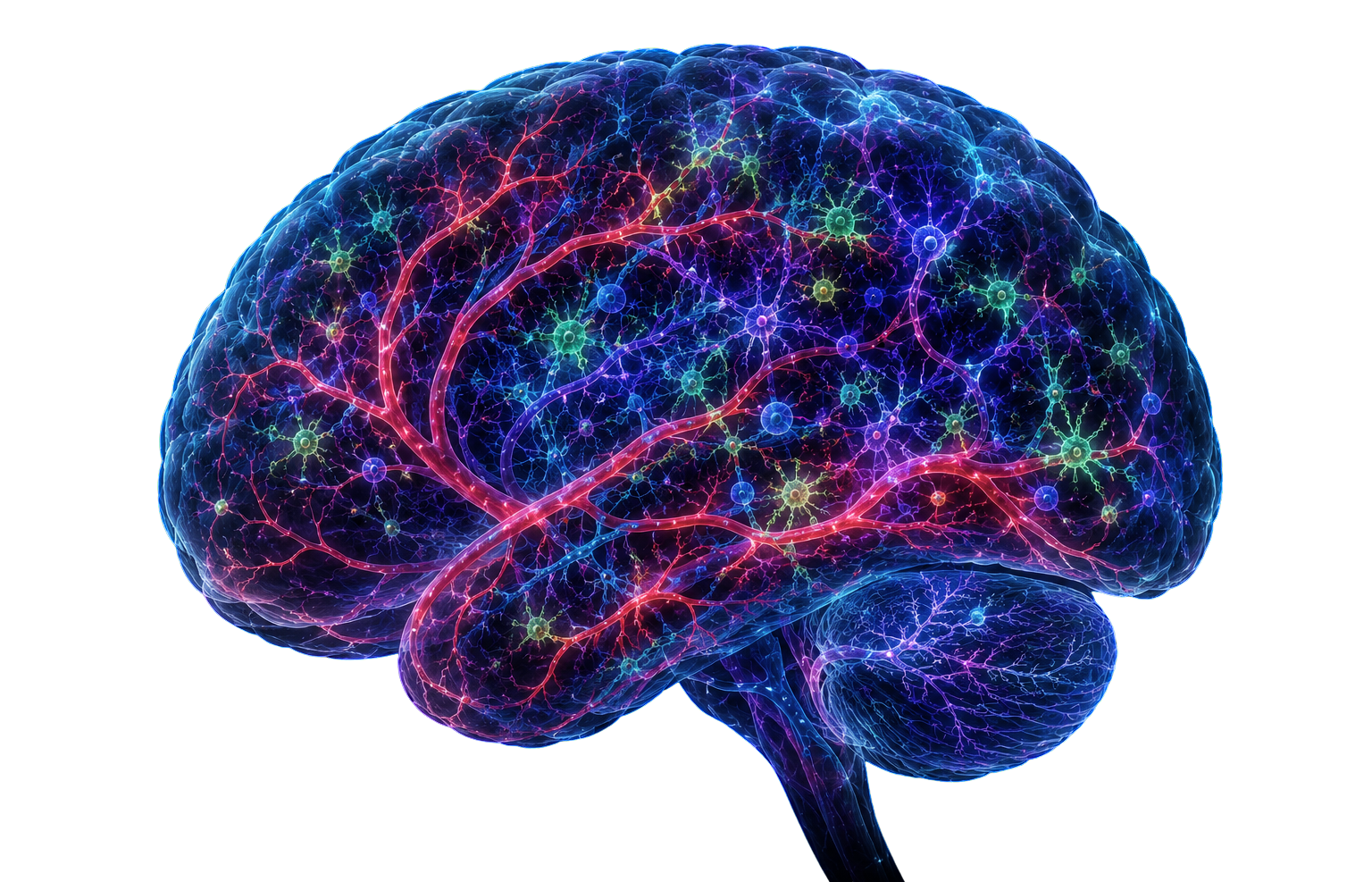
Stroke damages not only neurons, but also the intricate networks of blood vessels and immune cells that shape recovery. In a new collaborative project, Daniel Razansky and Susanne Wegener aim to develop advanced imaging technologies that can visualize these interactions across the living brain with unprecedented detail. By bridging the gap between microscopic and large-scale brain imaging, their work seeks to uncover how neurovascular and immune processes contribute to stroke damage and repair.
Hi Daniel and Susanne, your new project, which will run over the next few years, maps interactions between blood vessels, neurons, and immune cells in the brain after stroke. Could you explain in simple terms what this means and why it matters?
Stroke is a major health burden, affecting approximately five million people every year. Patients experience sudden neurological symptoms such as loss of speech or weakness in their extremities. Current treatments mainly focus on removing the clot and restoring blood flow, but recovery often remains incomplete.
While the effects of ischemia – the lack of blood supply to neurons – have been extensively studied, the contributions of immune cells and the brain’s microvasculature have only recently gained attention. Understanding how blood vessels, neurons, and immune cells interact may be critical for improving stroke treatment, but studying these interactions has been challenging because of their widespread presence in the brain and the limitations of current in vivo imaging techniques.
Cerebrovascular diseases are a major global health burden, yet many mechanisms remain unclear. What key gaps in our understanding does your project aim to address?
We previously found that neutrophils obstruct capillaries immediately after stroke onset, and that releasing these blockages contributes to reperfusion and recovery. However, we still do not understand how these and other immune cells change after stroke or how they interact within the brain’s complex vascular networks and fluid dynamics. Many open questions remain: why these cells accumulate, what drives their invasion into damaged brain tissue, and how they influence ischemic injury and recovery.
Your work aims at developing a new imaging approach that captures brain microcirculation across large areas while maintaining cellular detail. What will make this method unique, and what do you hope it will reveal that was not possible before?
Existing preclinical cerebrovascular imaging methods can generally be divided into microscopic techniques, such as two-photon microscopy, and macroscopic approaches like MRI. Microscopic methods provide excellent detail but are limited to very small brain regions and often require invasive procedures such as craniotomy or skull thinning. In contrast, macroscopic imaging can cover the whole brain but lacks the spatial resolution needed to visualize small vessels and capillaries accurately. Our project aims to develop a new generation of fluorescence localization microscopy techniques that bridge this gap by enabling minimally invasive imaging of large-scale cerebrovascular dynamics with both high spatial and temporal resolution.
One major challenge in brain research is linking processes across scales – from individual cells to whole-brain dynamics. How does your approach help bridge this gap?
Our suggested method achieves super-resolution imaging by localizing and tracking fluorescent particles or fluorescently labelled cells circulating in the bloodstream using a widefield microscopy setup operating at very high frame rates. This allows us to observe interactions between cells and blood vessels in real time while simultaneously imaging relatively large brain areas. Deep learning-assisted 3D vessel segmentation and advanced data analysis strategies will further help us understand how cellular interactions and vascular network dynamics shape cerebrovascular health and disease. We plan to apply this novel technique to unveil previously unseen cellular and vascular interactions in a rodent stroke model.
The immune system is increasingly recognized as a key player in stroke and vascular aging. What role do immune cells play in the processes you plan to study, and how does your multiparametric approach help capture these interactions?
Immune cells are involved both in tissue damage and in tissue repair after stroke. Their regulation is highly dynamic and differs between individuals. Immune activation begins very early after stroke and may contribute to a pro-thrombotic state, for example through interactions with platelets or the release of neutrophil extracellular traps. These signals can also influence other brain regions and even the whole body. We are only beginning to understand the full role of these cells. Using our imaging technologies together with well-characterized stroke and reperfusion models, we hope to capture many aspects of these complex mechanisms.
More broadly, advanced imaging technologies are rapidly transforming neuroscience. Where do you see the biggest opportunities – and remaining challenges – for large-scale brain imaging in the coming years?
Large-scale imaging can reveal the complex communication taking place between different systems in the brain. Adding the vascular and blood-flow component is particularly important for studying many neurological conditions, including neuroinflammatory and neurodegenerative diseases. One major challenge will be managing and analysing the enormous amounts of data these technologies generate, which will require appropriate infrastructure and computational tools. More broadly, close collaboration between technology developers, basic neuroscientists, and clinician scientists will be essential for achieving meaningful advances. We look forward to the first results of our collaborative project.
Thank you for sharing your perspectives, and we wish you every success with your research.
Useful links:
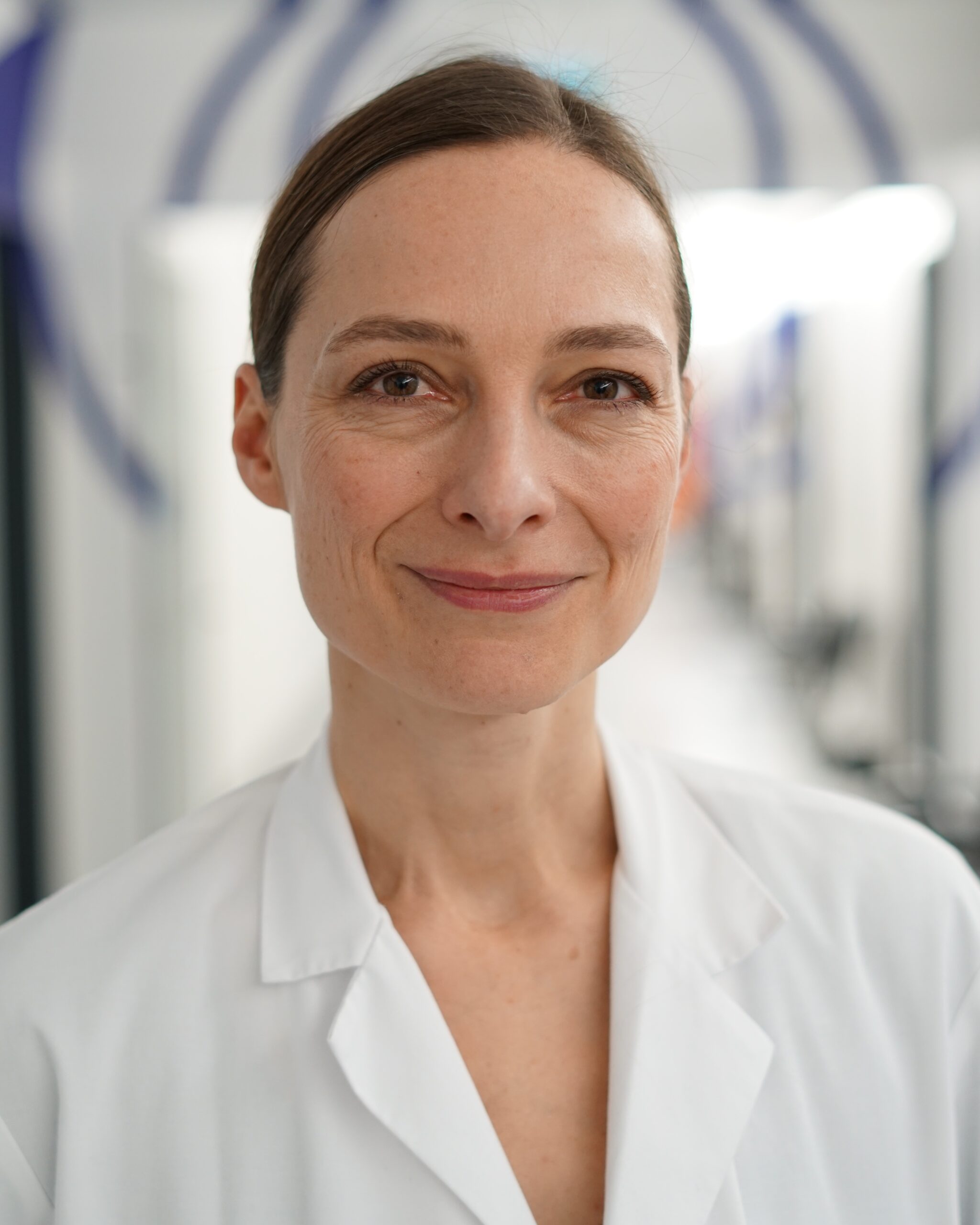
Prof. Dr. med. Susanne Wegener, Senior Physician, Department of Neurology at USZ and UZH
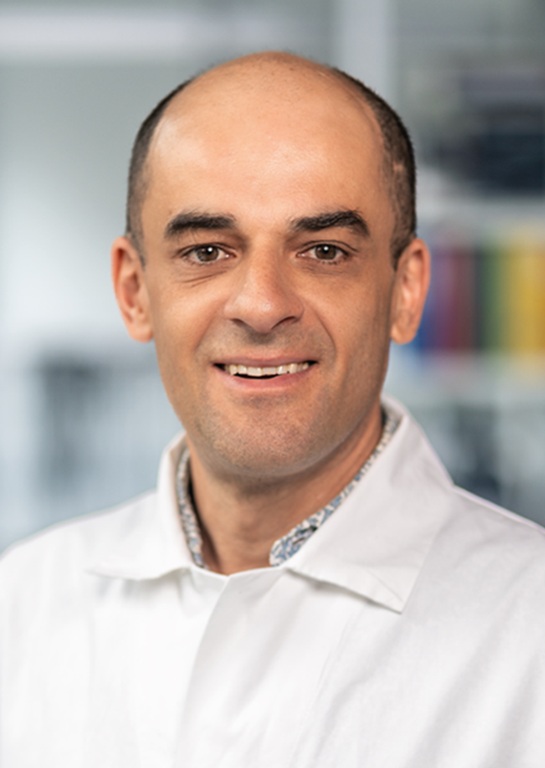
Prof. Dr. Daniel Razansky, Full Professor of Biomedical Imaging at UZH and ETHZ
Main Image: AI generated